
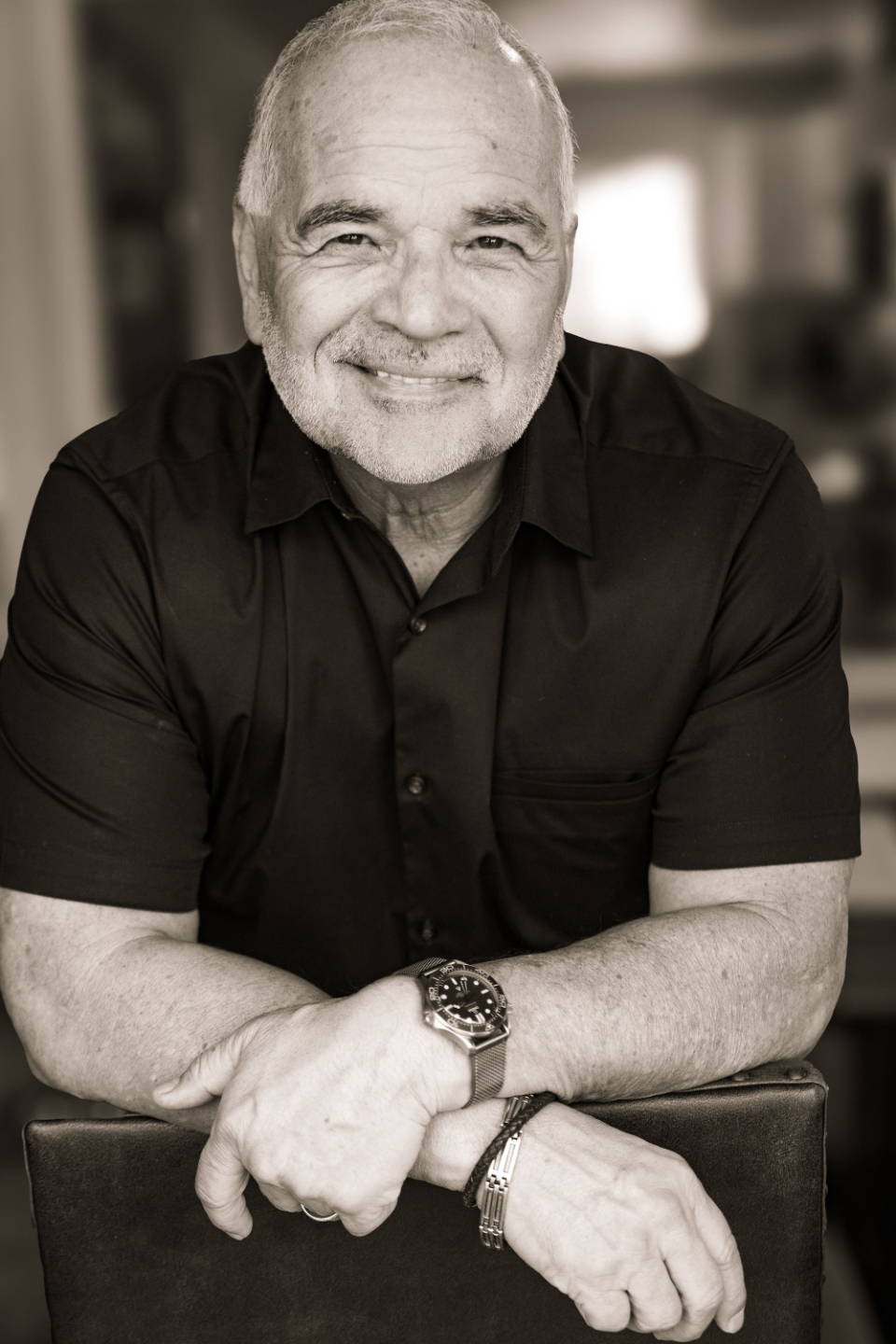
Hi, I'm Richard Ramos!
As an executive leader, organizational developer, and community practitioner, I have worked with families, youth development, nonprofit leadership, and executive coaching. Through my experience with these different groups, I noticed a pattern that remains remarkably consistent:
People shape relationships.
Relationships shape culture.
Culture shapes what becomes possible.
This is why the Human Flourishing Leadership Framework isn't a collection of unrelated programs. It is the expression of a larger developmental philosophy:
Develop People → Strengthen Leadership → Build Healthy Cultures → Advance Human Flourishing
Practitioner Before Program
One of the distinguishing characteristics of this Human Flourishing Leadership Framework is that its leadership philosophy has been developed through practice.
It began with my work developing parent mentors (leaders) to work with parents of high-risk youth. However, my career has also included work in juvenile and adult correctional environments, community organizing, writing, speaking, organizational leadership, and executive coaching.
In 2003 I founded and led a nonprofit intermediary organization. During my 20-year tenure we invested $105 million into more than 220 community organizations in several States and numerous cities while developing leaders, organizational capacity, philosophy, and culture. At the same time, I was developing my parent leadership program (part-time) and seeing firsthand what happens when investment in organizations was coupled with investment in the people doing the work.
My intention now is to take my leadership and organizational development work into new places and horizons of influence.
What This Model Does for Organizations and Communities
The Human Flourishing Leadership Framework is built around several distinctions.
It develops people, not merely participants.
The objective isn't attendance. It is increased human and leadership capacity.
It emphasizes practice, not simply knowledge.
Participants are qualified by their commitment to apply what they learn within families, organizations, and communities.
It develops multipliers.
The model intentionally equips people capable of carrying development to others.
It leaves capacity behind.
Success doesn't mean communities become increasingly dependent upon any one leader. Success means qualified local leaders become increasingly capable of developing people themselves.
Where Does Transformation Need to Begin?
Perhaps it's personal. Perhaps it's your team, your organization, or the young people and parents in your community.
START A CONVERSATION